
The iKon-M camera has been used in the development of threshold photoelectron-photoion coincidence velocity imaging apparatus.
A team working at China’s National Synchrotron Radiation Laboratory at Hefei has used a novel threshold photoelectron-photoion coincidence (TPEPICO) velocity imaging technique to determine the formation pathways of nitric oxide.
Nitrous oxide is the fourth largest contributor to global warming, behind water vapour, carbon dioxide and methane, and has replaced CFCs as the dominant ozone-depleting substance emitted by humans.
“Ultra low noise performance is vital in our work on the photodissociation dynamics of ions,” said one of the lead researchers, Xiaoguo Zhou.
“At the heart of the experimental apparatus is Andor’s thermoelectrically cooled iKon-M 934 camera. Compared to cameras normally used in ion imaging experiments, the Andor camera offered very much lower read noise and high sensitivity over accumulation periods of up to 60 minutes.”
The TPEPICO apparatus was set up at the synchrotron’s U14-A beam line and a continuous supersonic molecular beam of pure N2O gas introduced into the photoionisation region through a homemade 30 micron diameter nozzle.
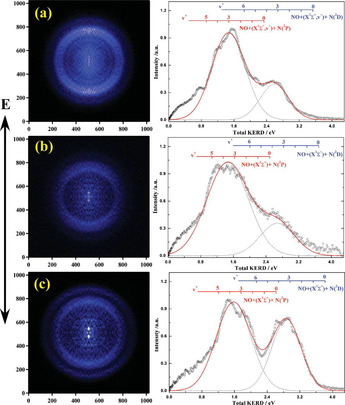
Photoelectrons and photoions were collected through a special ion lens to map their velocity images simultaneously and the coincident photoions projected onto a dual microchannel plate backed by a phosphor screen where the Andor DU934N-BV TE-cooled CCD detector recorded the images.
By applying a pulsed high voltage on MCP as the mass gate, the three-dimensional (3D) time-sliced image of ions was obtained.


