
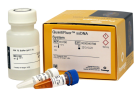
Promega has launched the QuantiFluor ssDNA for highly sensitive quantitation of single stranded DNA (ssDNA).
The QuantiFluor ssDNA dye enables quantitation of small amounts (as little as 200pg per well) of ssDNA in solution, saving precious sample for downstream assays.
For low-concentration samples, the new system delivers sensitivity several thousand-fold greater than absorbance at 260nm, and has a higher dynamic range.
The QuantiFluor ssDNA System includes all the required reagents to deliver consistent ssDNA quantitation results.
It claims to be easy to set up on microplate or single-tube fluorometers, and is available as an integrated solution with instrument pairing.
Detecting and quantitating ssDNA is important for a variety of molecular biology research applications. These include:
- Studying ssDNA viruses
- Quantitating short synthetic ssDNA probes for site-directed mutagenesis
- Analysis of first-strand cDNAs
- Quantitating bisulfate-treated DNA to study DNA methylation
The new dye system is the latest addition to Promega’s nucleic acid quantitation dyes, which also includes the QuantiFluor dsDNA System and QuantiFluor RNA System.
