
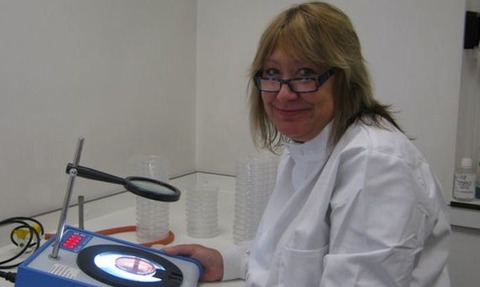
Synbiosis’ aCOLade is being used by Pukka Pies to ensure its products are free from microbial contaminants.
The aCOLade colony counter is being used in the Onsite Microbiology Testing Laboratory at Pukka Pies to accurately count mixed colonies on TVC (Total Viable Count) plates, as well as bacterial colonies.
Scientists at Pukka Pies are able to perform many different counts using the aCOLade because the system has interchangeable backgrounds, as well as an adjustable plate ring, making it suitable for counting shiny colonies and colonies on different plate sizes.
Val Burton, Laboratory Supervisor at Pukka Pies said: “Our previous colony counter was white light based, which gave us a reflection problem, especially when we were counting white colonies on TVC media. We saw the aCOLade advertised as being anti-glare because it offers two different backgrounds and decided to give this counter a try in our lab.”
Val continued: “We have been using the aCOLade for almost a year to count around 50 plates every day. The aCOLade is brilliant. The system is reliable, sensitive and has a nice viewing magnifying glass so suits our needs perfectly. We’d definitely re-order another aCOLade for colony counting.”
